Designathon - 2nd Place
Tabee

A UC San Diego designathon challenged us to create a product addressing learning needs. We designed Tabee, a reimagined classroom desk for students with ADHD and auditory processing challenges, featuring built-in fidget tools and real-time transcription to boost focus, ease stress, and promote inclusive learning.
A UC San Diego designathon challenged us to create a product addressing learning needs. We designed Tabee, a reimagined classroom desk for students with ADHD and auditory processing challenges, featuring built-in fidget tools and real-time transcription to boost focus, ease stress, and promote inclusive learning.
Timeline: 8 Hours
Role: UX Designer & Researcher, 3D Modelling
Team: Alex Trinh, Sally Liang. Michale Chiang
Context
When I was little, I struggled with learning, but why?
When I was little, I struggled with learning, but why?
With rising ADHD diagnoses among youth, concerns grow over its impact on classroom learning. Often underdiagnosed, untreated ADHD can lead to long-term challenges like job instability and substance abuse, highlighting the need to better support students with ADHD in school.
With rising ADHD diagnoses among youth, concerns grow over its impact on classroom learning. Often underdiagnosed, untreated ADHD can lead to long-term challenges like job instability and substance abuse, highlighting the need to better support students with ADHD in school.
The Problem
How might we create a classroom desk that helps students with ADHD manage restlessness, stay focused, and remain engaged—without distracting others?
How might we create a classroom desk that helps students with ADHD manage restlessness, stay focused, and remain engaged—without distracting others?
Key Goals:
Encourage focus through sensory engagement.
Minimize distractions for both the user and peers.
Promote accessibility for students with auditory processing or hearing challenges.
Maintain a cost-effective, classroom-appropriate design.
Encourage focus through sensory engagement.
Minimize distractions for both the user and peers.
Promote accessibility for students with auditory processing or hearing challenges.
Maintain a cost-effective, classroom-appropriate design.
The Research
What is some information on ADHD learning in our youth?
What is some information on ADHD learning in our youth?
Before designing, we dove into research on ADHD and learning difficulties to better understand the root of the problem.
We Learned that:
Before designing, we dove into research on ADHD and learning difficulties to better understand the root of the problem.
We Learned that:
Population
Over 6 million children in the U.S. are diagnosed with ADHD (CDC).
Problem Solutions
Common solutions like fidget spinners or toys can often distract more than help.
Improvement
Students with ADHD often benefit from tactile engagement and multisensory support in learning environments.
From these insights, our approach centered around building a structured yet flexible tool that allows students to redirect their energy in a productive way.
From these insights, our approach centered around building a structured yet flexible tool that allows students to redirect their energy in a productive way.
Design - Tabee Desk
What are we looking for?
What are we looking for?
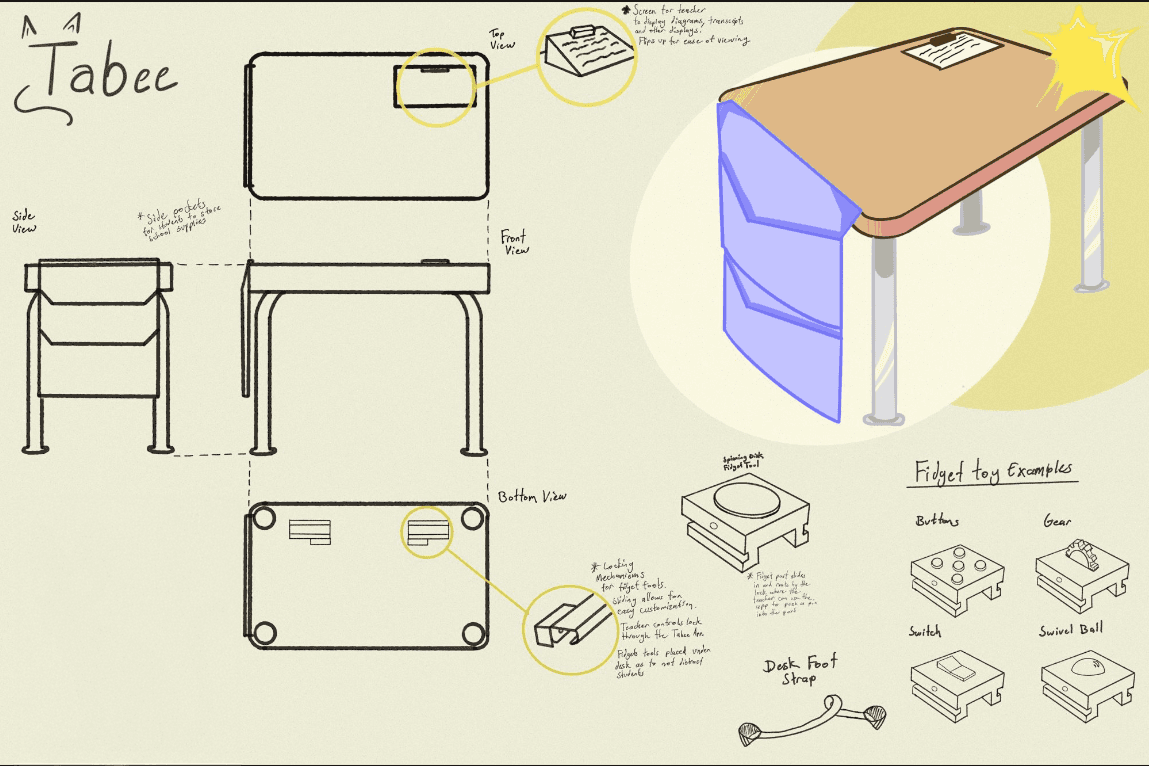
Tabee is an innovative reimagining of the traditional classroom desk. It allows students to channel their focus through built-in fidget mechanisms beneath the surface—completely out of sight to reduce visual distractions.
Tabee is an innovative reimagining of the traditional classroom desk. It allows students to channel their focus through built-in fidget mechanisms beneath the surface—completely out of sight to reduce visual distractions.
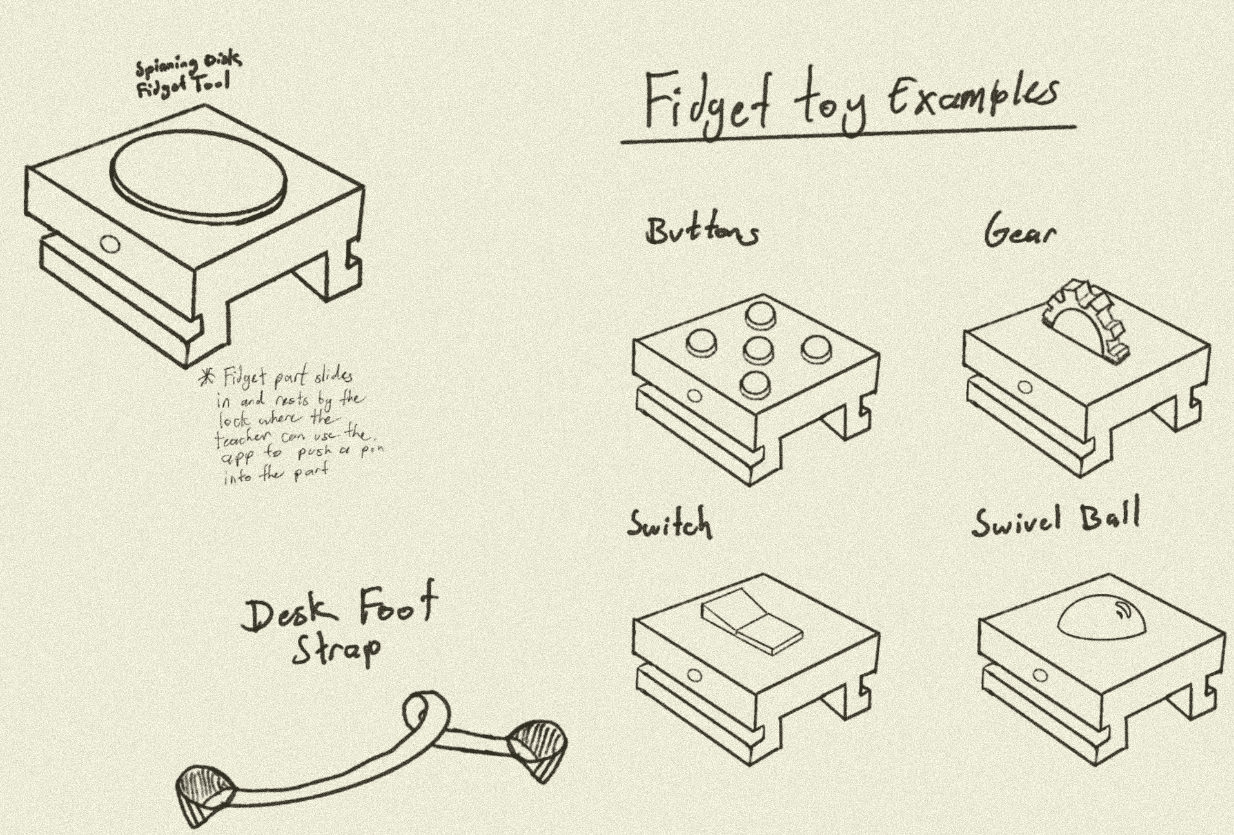
Inlaid Fidget Tools
Quiet, interchangeable modules under the desk designed for tactile stimulation without disrupting others.
Adjustable Foot Strap
For students who release energy through movement, the strap offers a safe outlet to fidget.
Real-Time Transcription Display
A flat, embedded screen that converts the teacher’s speech into text, aiding students with hearing or auditory processing difficulties.
Eco-Friendly Materials
Built using recycled wood and plastic, making it both sustainable and cost-efficient.
Building the Prototype
In the limited time of the designathon, we focused on producing a concept prototype emphasizing usability and inclusivity.
In the limited time of the designathon, we focused on producing a concept prototype emphasizing usability and inclusivity.
The desk’s frame was modeled after traditional school furniture—familiar and ergonomic—but integrated new, modular components that could be customized to individual students’ needs.
A sensor system was conceptualized to detect when a fidget module was locked into place, preventing unnecessary noise or distraction.
The desk’s frame was modeled after traditional school furniture—familiar and ergonomic—but integrated new, modular components that could be customized to individual students’ needs.
A sensor system was conceptualized to detect when a fidget module was locked into place, preventing unnecessary noise or distraction.
UI Design
Design in Figma
Design in Figma
We also designed a companion app concept for teachers to view or control the setup, ensuring classroom cohesion.
We also designed a companion app concept for teachers to view or control the setup, ensuring classroom cohesion.
Loading Screen
The start screen displaying the app
The start screen displaying the app


Onboarding Screen
This would ensure the teacher is correct before entering their classroom.
This would ensure the teacher is correct before entering their classroom.
Homescreen
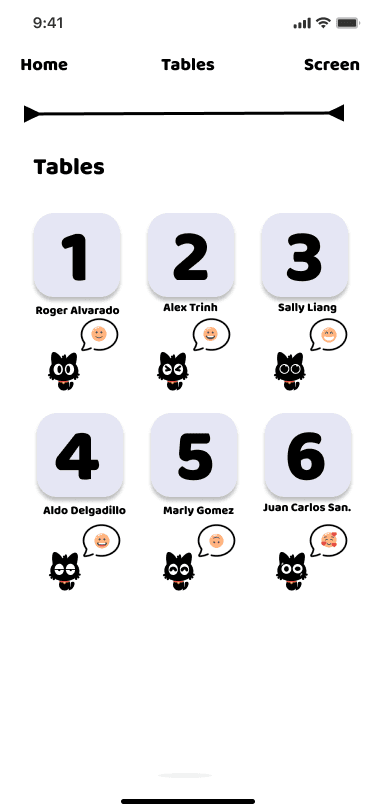
A place where the teacher could see whether a student has a Tabee desk or a regular desk. This allows them to assign students to a seating chart and add notes for each one. They could also lock or unlock the Tabee desk’s fidget toy located under the desk.
A place where the teacher could see whether a student has a Tabee desk or a regular desk. This allows them to assign students to a seating chart and add notes for each one. They could also lock or unlock the Tabee desk’s fidget toy located under the desk.


Screen Frame
The teacher could activate a transcript or screen-sharing feature, allowing students with the Tabee desk to read the transcript or view what the teacher is displaying on the board.
The teacher could activate a transcript or screen-sharing feature, allowing students with the Tabee desk to read the transcript or view what the teacher is displaying on the board.
Table Screen
Display the seating chart created by the teacher, allowing them to track and determine student behavior using emojis.
Display the seating chart created by the teacher, allowing them to track and determine student behavior using emojis.
Design Challenges
Every great idea comes with hurdles—especially under time pressure.
Every great idea comes with hurdles—especially under time pressure.
We had so many ideas—adjustable screens, multiple fidget types, embedded displays—that we risked overcomplicating the design. Through discussion, we learned to simplify, focusing on the most impactful features for students’ daily learning experience.
Screen placement was another challenge. We debated between embedding it flush with the desk for durability or angling it slightly upward for easier visibility.
We had so many ideas—adjustable screens, multiple fidget types, embedded displays—that we risked overcomplicating the design. Through discussion, we learned to simplify, focusing on the most impactful features for students’ daily learning experience.
Screen placement was another challenge. We debated between embedding it flush with the desk for durability or angling it slightly upward for easier visibility.
The Conclusion
Reflection and Future Goals
Reflection and Future Goals
Despite the tight timeframe, we’re proud of how much ground we covered. Our biggest success was creating a tangible idea that directly addresses inclusivity in classrooms. If we had more time, we’d explore: Cost reduction for real-world implementation, testing with actual students and teachers.
Tabee isn’t just a desk—it’s a tool for empowering every student to learn comfortably, confidently, and without barriers.
Despite the tight timeframe, we’re proud of how much ground we covered. Our biggest success was creating a tangible idea that directly addresses inclusivity in classrooms. If we had more time, we’d explore: Cost reduction for real-world implementation, testing with actual students and teachers.
Tabee isn’t just a desk—it’s a tool for empowering every student to learn comfortably, confidently, and without barriers.

•
•
•
•
•
•
1
•
•
2
•
•
3
•
•
4
•
•
5
•
•
6
•
•
7
•
•
8
•
•
9
•
•
10
•
•
11
•
•
12
•
•
13
•
•
14
•
•
15
•
•
16
•
•
17
•
•
18
•
•
19
•
•
20
•
•
21
•
•
22
•
•
23
•
•
24
•
•
25
•
•
•
•
•
•
•
•
•
•
•
1
•
•
2
•
•
3
•
•
4
•
•
5
•
•
6
•
•
7
•
•
8
•
•
9
•
•
10
•
•
11
•
•
12
•
•
13
•
•
14
•
•
15
•
•
16
•
•
17
•
•
18
•
•
19
•
•
20
•
•
21
•
•
22
•
•
23
•
•
24
•
•
25
•
•
26
•
•
27
•
•
28
•
•
29
•
•
30
•
•
•
•
•
•