






Leap
Service:
Research Project
Role:
UX Designer & Researcher, 3D Designer
Timeline:
5 Weeks
LEAP is a 3D AR/VR rehabilitation concept created to explore how stroke-recovery exercises could become more understandable, engaging, and motivating inside an immersive garden environment. Rather than treating rehabilitation as a collection of disconnected mini-games, our team designed a system where guidance, therapy activities, feedback, and rewards work together as one experience.

Context on Question
Why Strokes?
In the United States, only 10% of stroke patients achieve near-complete recovery, costing the U.S. $56 billion annually and overwhelming therapists with demand. With a rapidly aging population, what can we do to improve the odds of success while ensuring resources are abundant?
The Problem
How can we better support elderly stroke patients in their hemispatial neglect recovery using emerging technologies like artificial and virtual reality at our disposal?
Some goals we placed on ourselves.
Learning why the number of complete recoveries is low.
Researching everything about strokes and their rehabilitation process.
The Research
Strokes, Hemispital neglect, baking ….. How are they connected?
Our team initially had limited knowledge about strokes and hemispatial neglect, so we aimed to learn everything we could about the neurological and social challenges surrounding them. To break it down, a stroke occurs when blood flow to the brain is interrupted, causing parts of the brain to die. In simple terms, hemispatial neglect is a common effect of stroke that impairs a person’s ability to notice or respond to stimuli on one side of their body. This is what we’ll be discussing below.
Symptoms
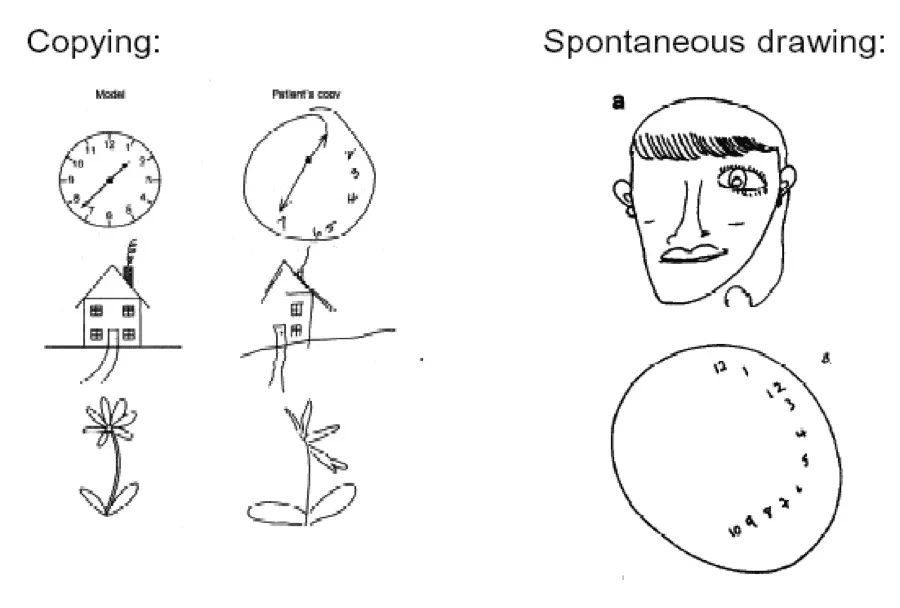
Symptoms may include ignoring the left side of space or the body, bumping into objects, difficulty reading or writing on one side, reduced use of the affected limb, and even unawareness of the condition.
The Research - People
These are people's lives, so it’s our responsibility to design with care.
We kept these symptoms in mind to understand therapy exercises and how they build motor skills, helping us design with empathy and focus on patients’ needs. Before that, we needed to answer why the complete recovery rate is so low. Based on our research, we found several shortcomings in traditional rehabilitation methods.
Perceived Patient Autonomy (PPA)
Providing control, engagement, and personal insight throughout their recovery journey.
Annual cost of therapy
The rising costs of traditional therapy place a financial burden on patients, while the aging population in the United States creates logistical pressures as more patients require care.
Low patient adherence
Highlighting the importance of consistent rehabilitation and the context of how each therapy experience contributes to overall recovery.
Competitive Analysis
Who are talking about?
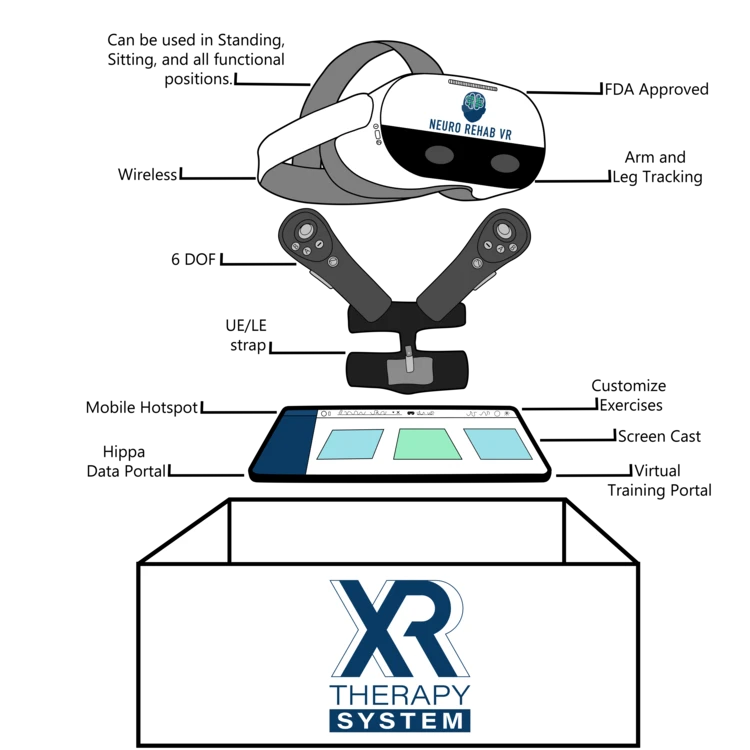
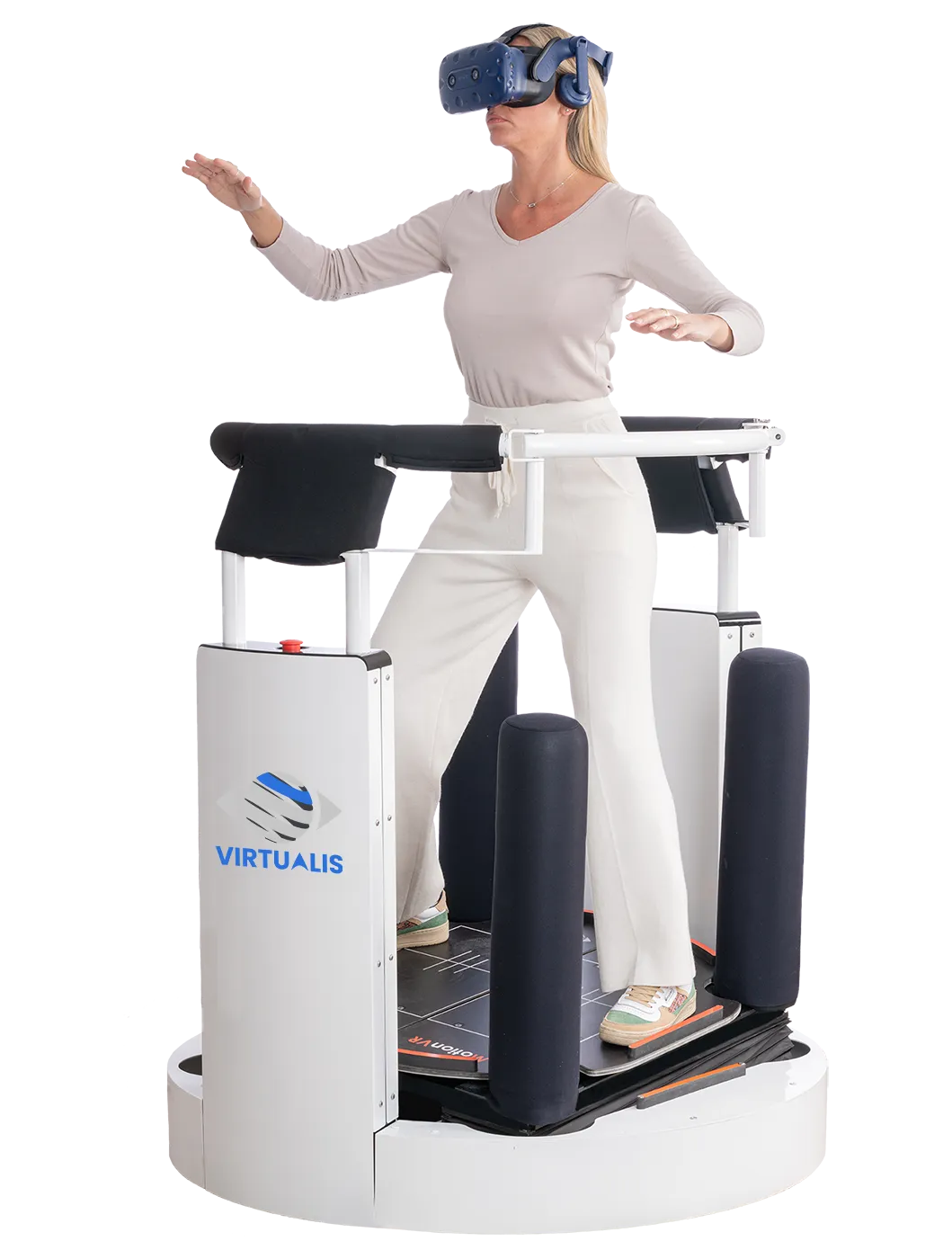
We conducted a SWOT analysis of VR rehabilitation tools from Exergames, Neuro Rehab VR, and Immersive Rehab to understand the current VR therapy space. This revealed what works well for patients and what could be improved.
Storyboard
Once upon a time
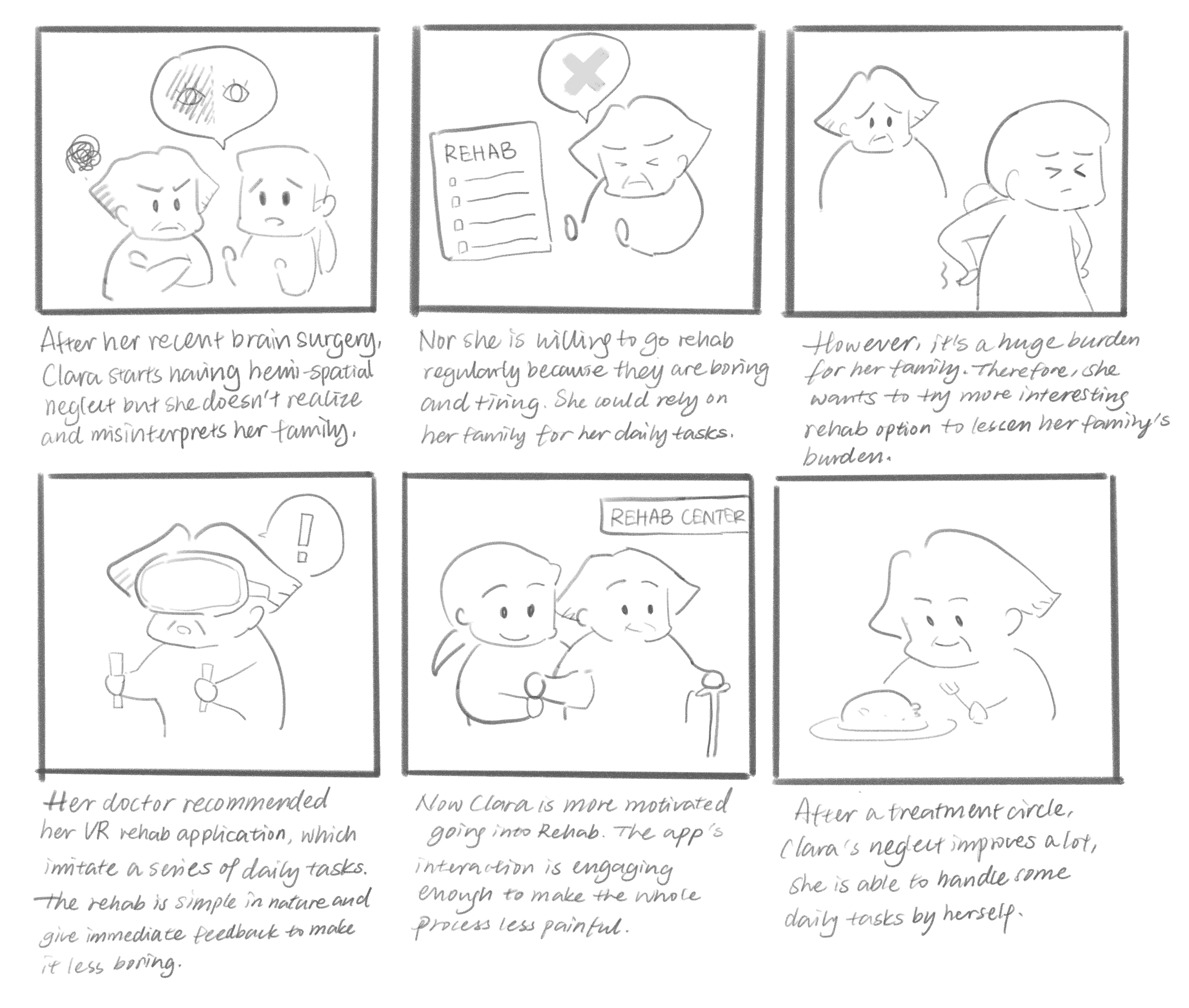
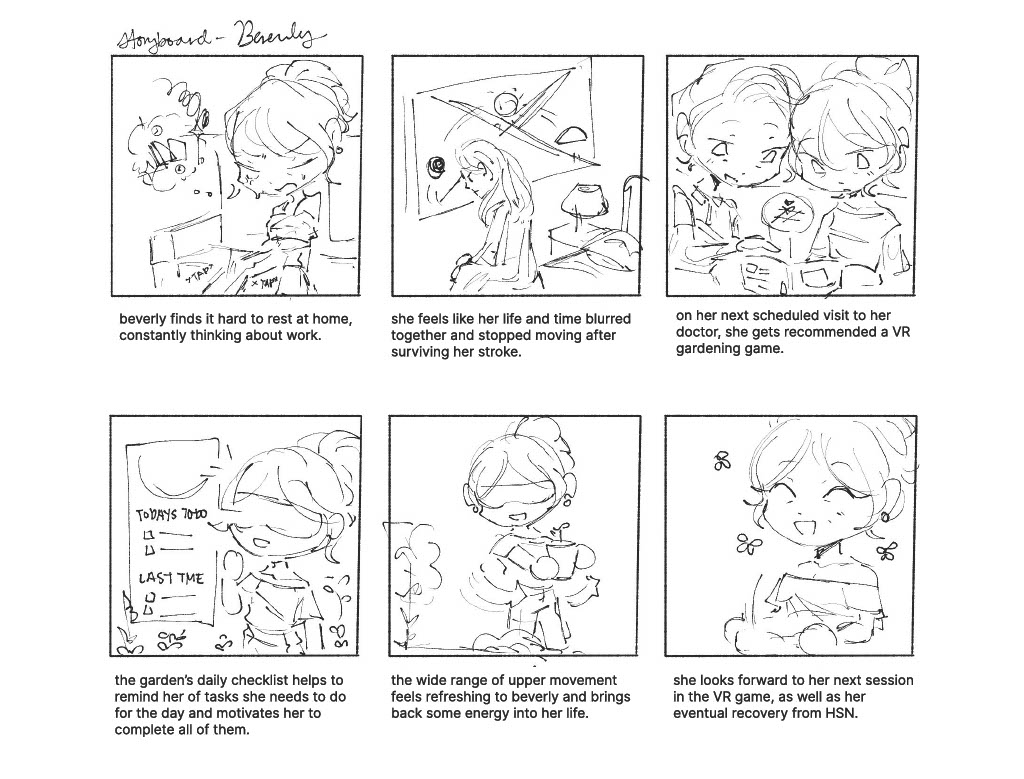
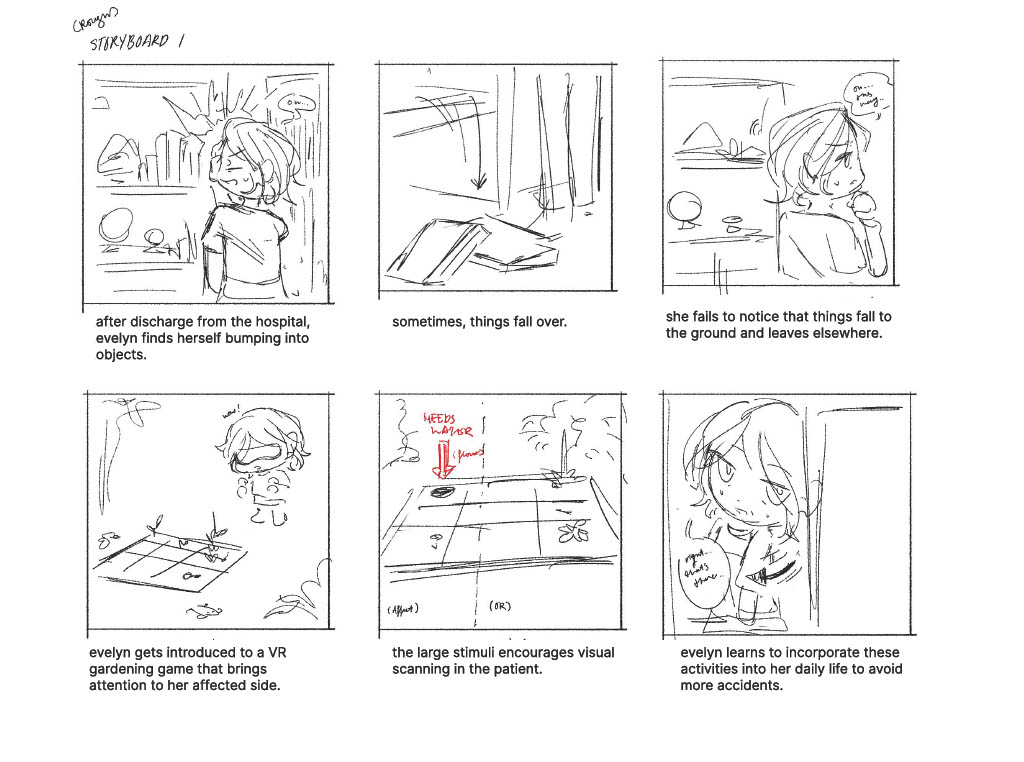
Storyboards that were made to better illustrate our users and the cases that they might need for our application, also to give our team a better understanding of the people we were designing for.
Design Goals
With all the research, what now?
Our goals based on the needs assessment and competitive analysis is to mainly target a few areas of opportunity we identified key targets to accelerate recovery effort and enhance outcome on our users.
Motivation Enhancing System
Our main goal was to give patients a sense of control by showing their progress and how each step supports their recovery
Cost and Time Efficiency
Our goal was to reduce clinic visits by letting doctors review progress and conduct virtual therapy sessions.
Incorporating Therapy Exercises
We based the therapy aspect of our app on real-world exercises for patients with hemispatial neglect.
Comfortable Setting
Our app could be used in a clinic, home, or grocery store, but we chose a setting that is comfortable and allows exercises to be done clearly
Concept Sketching
Now we talk about Baking
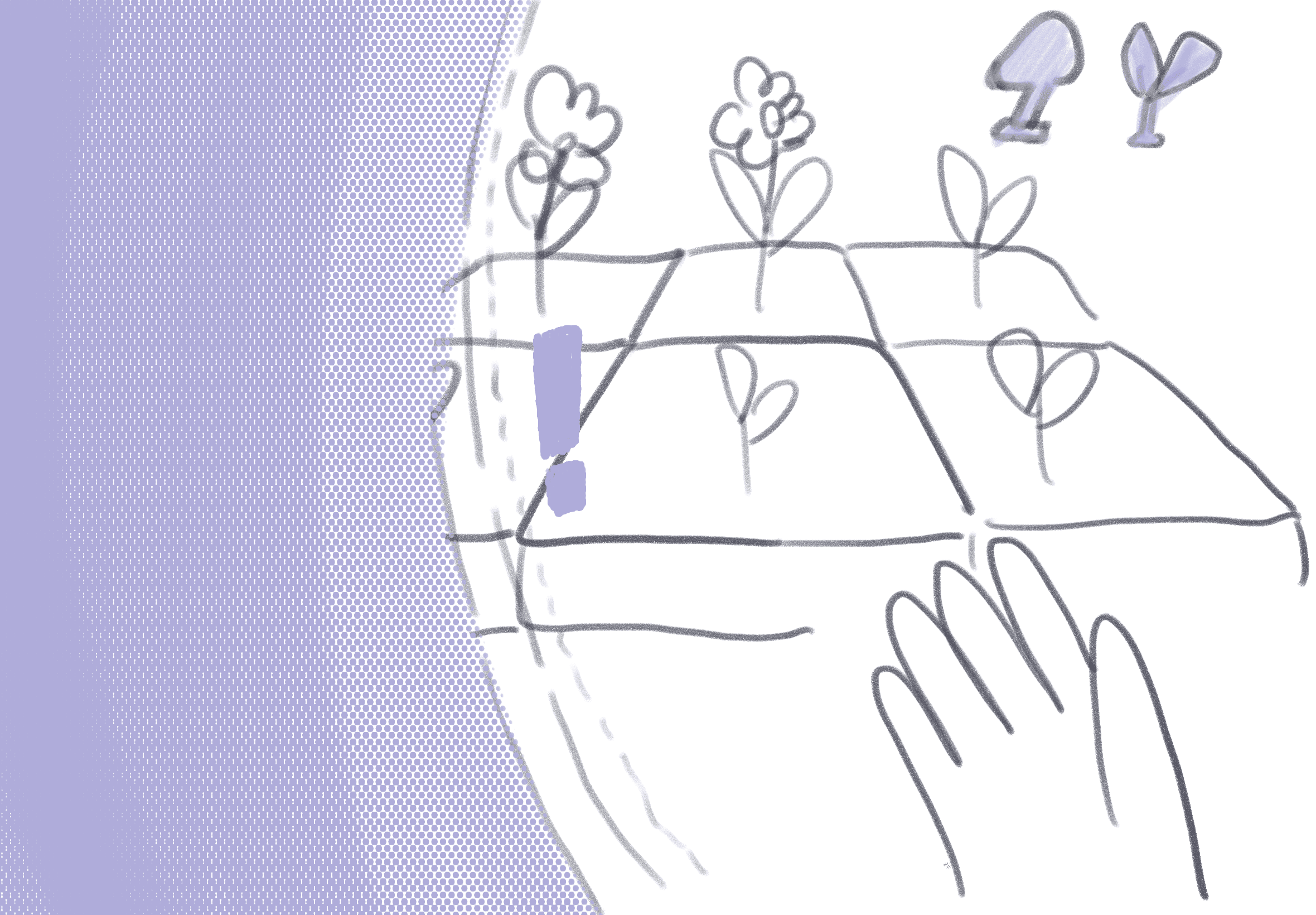
Our team designs many different quick sketches for the initial onboarding on our sessions by illustrating our setting and the therapy exercise we plan to incorporate.
Garden Environment Setting
To have a place of comfort, calming, and relaxing environment we chose to structure our rehabilitation tool to be a garden.
Therapy Exercices
Baking Tray Test was an exercise we used since it was made to assess spatial awareness and fine motor skills by asking patients to distribute time evenly on a tray. And a game called Follow the Frog was used to enhance movement and visual scanning

Mid-Fi
Design in Figma and Vectary
After viewing many of our ideas sketches out we polished them to become towards having the core idea of our application that targets our design goals and tasks.
Garden Environment
We chose this location to create a calming environment and give users a sense of familiarity.

Initial Onboarding
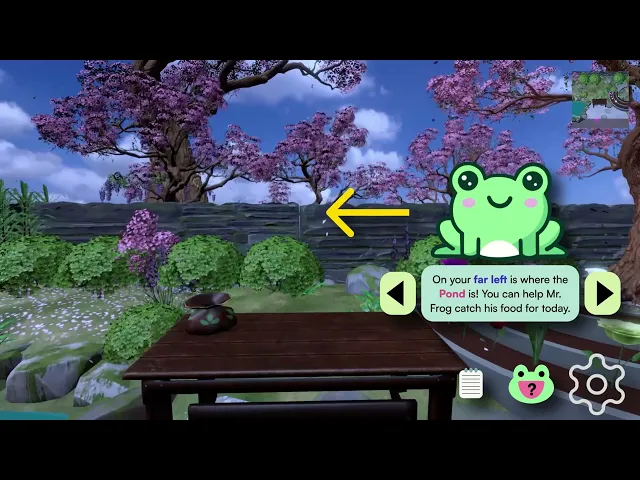
Our users tend to be older and may face cognitive challenges, so we included a character with dialogue to guide and welcome them through their exercises.

Therapy Exercises - Baking Tray Test
Inspired by the Baking Tray Test, which assesses spatial awareness and motor skills, we designed a table that grows with each level, where users plant seeds in a grid.

Therapy Exercises - Follow the Frog
This activity is meant to enhance memory, visual scanning, and spatial awareness by having patients point in order where a fly lands, gradually increasing in difficulty as they progress.

Design - Usability Testing Results
Made for who? EVERYBODY!
Due to our time constraints our user testing we conducted with non-target users, however the feedback given was insightful and allowed us to process, but we acknowledge the limitation in addressing the actual needs of patients with a HSN.
We ran moderated usability sessions with 10 testers using a multi-screen VR simulation of our garden therapy app. The tests validated core flows and surfaced improvements in guidance, interaction clarity, rewards, visuals, and layout—many of which we implemented immediately.
Onboarding & Guidance
Text advanced too quickly, so onboarding was made self-paced with clear, step-by-step instructions.
Rewards & Motivation
The purpose of flowers and rewards wasn’t clear, so we clarified the earn-to-plant flow and moved rewards out of the first view.
Interactions & Affordances
Interactables weren’t obvious, so we highlighted them, prioritized pointing over catching, and added entry gestures for mini-games.
Visual Design & Accessibility
Users wanted more vibrant colors, unique flowers, and a frog path adjusted for HSN, so we increased color and variety and shifted the frog path.
Mini-Game Flow & Completion
Transitions and completion cues were unclear, so we added clear states, transitions, and removed a redundant game.
Layout & Navigation
90° feature placement forced large torso turns, so we reoriented features to 45° for better visibility and easier navigation.
Second Iterations
Correcting Our Mistakes
Initial Onboarding
The tutorial character was redesigned with segmented instructions and navigation buttons. We also updated the style to improve readability and make it clear where users are clicking.

Therapy Exercises - Baking Tray Test
We updated the UI for better consistency and readability, and added a clear call-to-action to plant the reward flower after each mini-game, making the game flow easier to understand.

Therapy Exercises - Follow the Frog
We changed the game from 2D to 3D and added bolder assets to enhance the UI. Clear calls-to-action, like a “Next Step” button, were added to ensure smooth navigation, optimized for right-to-left usability.
Final Product
Video Video Video
Once we completed our user testing that allowed us to understand where weakness and strength are we incorporated the feedback on refining our onboarding process, enhancing UI consistency, and addressing specific usability concerns to better fit our prototype towards targeting our goals of improving motivation, adherence, and recovery outcome.
The Conclusion
Reflection and Future Goals
This project was an exciting opportunity to explore new design approaches for rehabilitation, a field I hope to continue pursuing. It allowed me to refine my design process and develop new skills, including 3D design using Vectary.
Developed in just five weeks, Leap was approved by stakeholders such as neuroscience experts, doctors, and CEOs. It became one of eight projects selected to continue as a dedicated UCSD course for 2024 to 2025, ensuring ongoing development. By addressing clinic constraints like limited space and staff, Leap offers a scalable, immersive solution that enhances recovery speed while reducing healthcare costs.